What is body awareness and how is it cultivated on the mat?
What is body awareness and how is it cultivated on the mat?
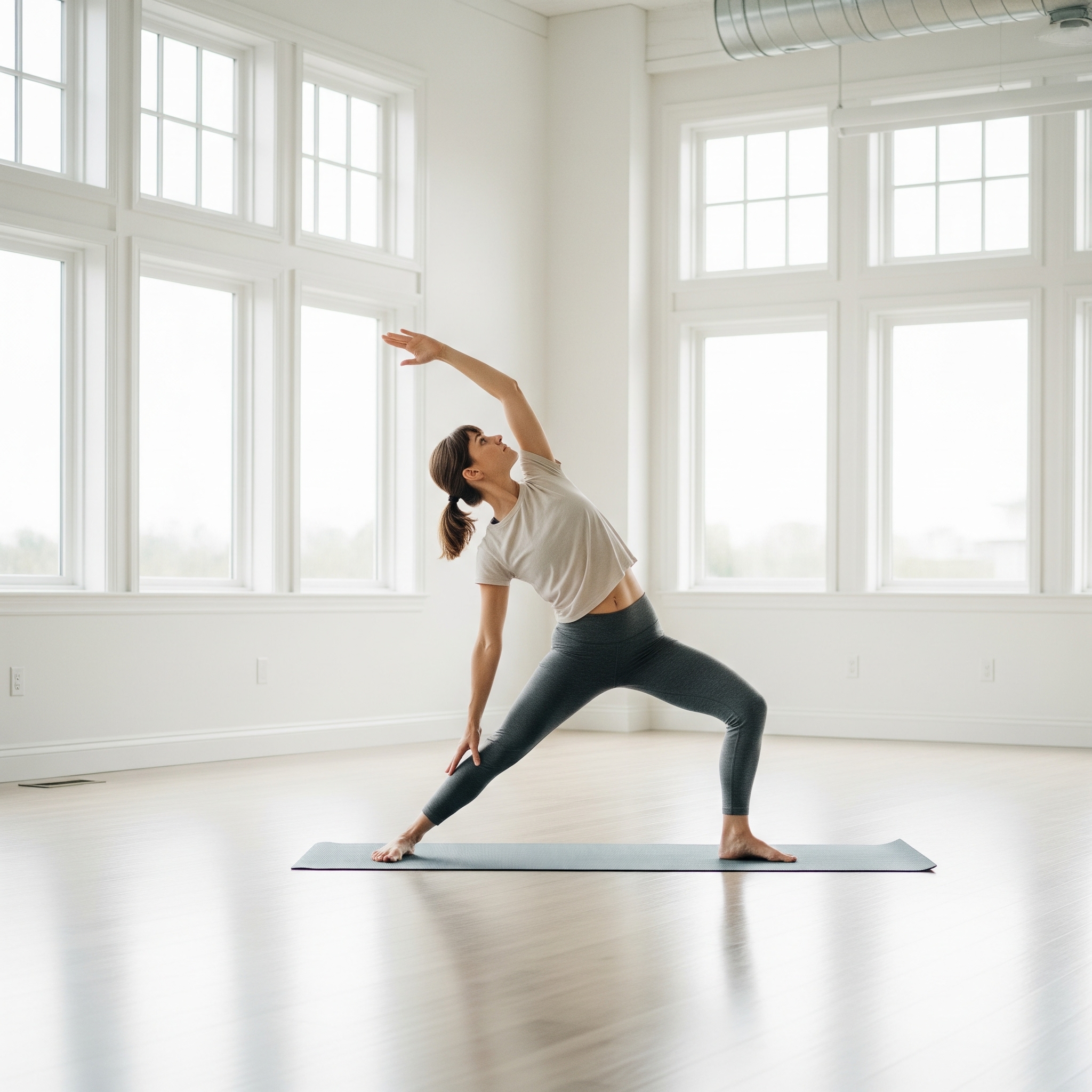
In the context of yoga, talking aboutbody awarenessIt is not an empty phrase or a mere aspirational goal. It is, in fact, the very core of the practice:to be in the body, to feel it from within, to inhabit it with presence and understandingIn a society that easily disconnects us from our own sensations, emotions, and physical limits, body awareness becomes a skill worth cultivating.
But what does it really mean to have body awareness? How is it developed? What role does yoga practice play in that process?
We will understand what body awareness is from a somatic and functional perspective, and how yoga —in its many forms— is one of the most powerful tools to develop it on the mat… and off it.
Body awareness: definition and scope
Body awareness is theability to perceive, interpret and respond to bodily sensations in real timeIt involves being in contact with what we feel physically, energetically, and emotionally, without external mediation, without judgment, and without disconnection.
This type of consciousness has several dimensions:
- ProprioceptionIt is the ability to perceive the position and movement of the body in space. For example, knowing if you are standing upright without needing to see yourself in a mirror.
- Interception: refers to the internal perception of physiological processes: heart rate, hunger, breathing, tension, temperature.
- Kinesthetic awareness: refers to the perception of movement, effort, and coordination between different parts of the body.
Having body awareness doesn't just mean "being aware of your body," but developing a dynamic and sensitive relationship with it. This allows, among other things:
- Prevent injuries by identifying tensions or imbalances.
- Improve physical performance by optimizing the use of the body.
- Regulating emotions through the recognition of their physical manifestations.
- To inhabit the present from a more complete and embodied perception.
Modern disconnection and the role of yoga
For much of the day, many people live from the neck up. We think, plan, analyze… but we rarely register what's happening in our bodies. We overlook accumulated tension, automatic postural habits, and physiological signs of fatigue or anxiety.
This disconnection from the body is not accidental: it is a consequence of a lifestyle that prioritizes the external and the immediate. In this context, yoga presents itself not as a fad or an isolated technique, but asa system of practices that re-establishes the connection with the body through care and respect.
Unlike other forms of training that focus on external results (strength, aesthetics, performance), yoga prioritizes the internal experience: how it feels to move, hold a position, and breathe. Each posture becomes a laboratory for internal observation, where the focus is not on "doing it right" but on...feel fully.
How is body awareness cultivated in the practice of yoga?
There is no single formula, but there are principles and approaches that favor this development during practice:
1. Slowness and sustained attention
Awareness takes time. When movement is rushed or automatic, there's no room to perceive nuances. Yoga slows the pace so you can pay attention to the details: how your foot lands, how your abdomen engages, which areas breathe freely and which don't.
This slowness is not laziness, it is presence.
2. Conscious use of breathing
Breathing is a direct tool for cultivating body awareness. Not only because it oxygenates tissues and regulates the nervous system, but also becausebring attention to the body from withinObserving how the chest expands, how the abdomen moves, or how air enters through the nostrils creates a more intimate connection with the bodily experience.
3. Non-judgmental self-observation
Yoga trains us touseswithout needing toassessIs there stiffness in the hips? Trembling in the arms? Difficulty coordinating? All of that is valid information, not mistakes. Body awareness is strengthened when we stop searching for the perfect posture and start listening to the body as it is.
4. Alignment and activation work
The technical work in yoga (joint alignment, activation of muscle chains, core stabilization) is not only for aesthetic or structural purposes. It serves torefine body awarenessUnderstanding how weight is distributed, how a scapula is activated, or how a twist is sustained improves body organization and strengthens the mind-body connection.
5. Somatic exploration and variability
Body awareness is also nourished byexploreIt's not just about repetition. Many yoga classes, especially styles like Vinyasa, introduce variations, fluid transitions, or pauses for self-adjustment. These approaches allow you to feel your body in different scenarios, and that broadens your range of perceptions.
Beyond the mat: body awareness in everyday life
One of the keys to yoga is that what you learn on the mat transfers to your daily life. As you develop body awareness, you begin to notice things that previously went unnoticed:
- You change position when you feel prolonged discomfort.
- You regulate your breathing in moments of stress.
- You notice how certain movements energize you and others tense you up.
- You realize it when you're clenching your teeth, always crossing the same leg, or shrugging your shoulders.
These small daily gestures are signs of aactive body presenceAnd they are also tools to prevent pain, manage emotions and improve quality of life in a comprehensive way.
At The Dojo: a conscious practice
At El Dojo, we understand the practice of yoga as a path of self-knowledge. Our classes are designed so that each person, from their starting point, can:
- Listen to your body without demands.
- Explore movement from a safe and attentive perspective.
- Understanding the technical fundamentals that promote conscious practice.
- Regain sensitivity and confidence in your own body system.
Whether through Hatha, Vinyasa, or more restorative practices, our priority is thatthe mat becomes a space for meeting yourselfA place to move, feel, adjust, let go… and be.
Body awareness isn't something you acquire all at once, but a skill that's cultivated day by day, breath by breath, practice by practice. In a world that constantly distracts us, yoga offers us an opportunity to return to our bodies, to listen to them, to inhabit them, and to care for them more deeply.
Practicing yoga is not just about doing poses: it's about learning tobein the body in a new way. A way that transforms how we move, how we feel, and how we live.
At El DOJO we accompany you in that process, with technical tools, close guidance and a safe space so that you can reconnect with your body… and with what lives within you.
Related articles
See more
Cultivating presence: taking yoga off the mat

Yoga and physical training: rivals or allies?
How to start yoga if you've never been flexible