Cultivating presence: taking yoga off the mat
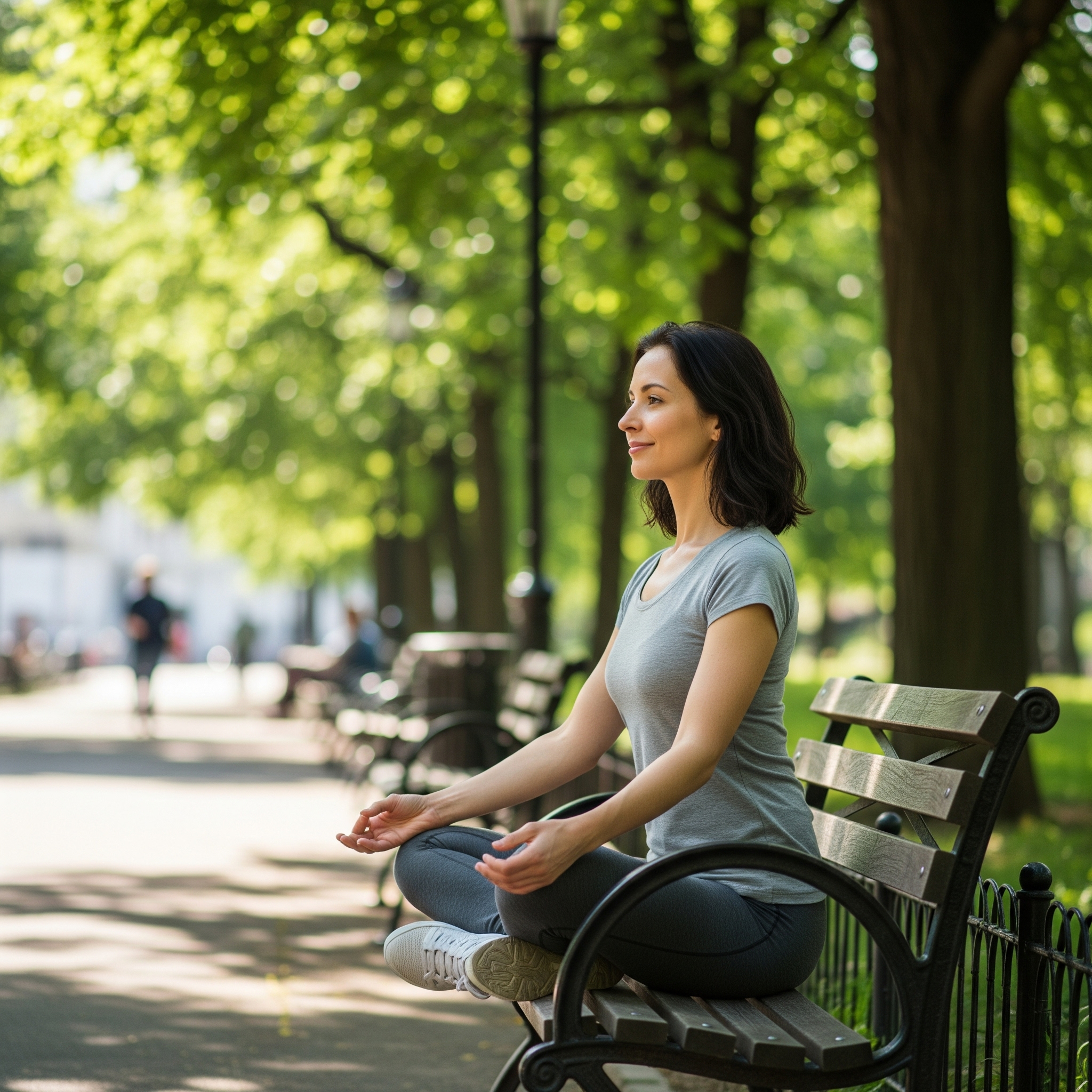
When we think of yoga, it's common to picture someone on a mat, silent, breathing deeply, moving fluidly between poses. However, that image—while valuable—represents only a small fraction of what this ancient practice truly means.
Yoga doesn't begin or end on the mat. The true essence of yoga lies in its ability totranscend the moment of formal practiceand extend to every aspect of daily life. Taking yoga off the mat means bringing its quality of mindfulness, its capacity for listening, and its deep connection with body and mind into our decisions, relationships, and daily routines.
We will explore what it means to cultivate presence from a yogic perspective, how to train it beyond postures, and why this ability is essential for a more balanced, conscious, and coherent life.
What does "presence" mean in the context of yoga?
In yoga, the concept ofpresenceIt is closely linked to mindfulness and the practice of being fully present in the here and now. Not as an abstract principle, but as a trainable state of the nervous system and consciousness.
Being present implies:
- Actively listen to what is happening inside and outside of yourself.
- Feel the body without judgment, with curiosity.
- Recognizing emotions and thoughts without immediate reaction.
- To fully inhabit the moment instead of living on autopilot.
On the mat, this state is cultivated with tools such as mindful breathing, focusing on physical sensations, and the intention behind each movement. But off the mat, the practice continues and—in fact—That's where it becomes more challenging and more transformative.
Why take yoga beyond formal practice?
Although a yoga session can bring us calm, flexibility, and focus, its real benefits are amplified whenThe practice becomes a way of lifeSome reasons:
1. Life is the true training ground
Traffic, relationships, work, difficult decisions, or moments of uncertainty: all these scenarios are opportunities to apply what you've learned on the mat. It's not about replicating postures, but about cultivating conscious responses instead of automatic reactions.
2. The body continues to speak outside the mat
Your body doesn't stop communicating with you even after class ends. Aches, pains, tension, fatigue, or well-being are messages that, if you learn to listen to them as you do in your practice, can help you regulate your pace, your habits, and your daily choices.
3. Breathing is your portable anchor
One of the great teachings of yoga is that breathing can regulate your nervous system. In moments of stress, anxiety, or overwhelm, slow, conscious breathing can completely change your internal state.You don't need a yoga studio to get back to your center.
4. Presence = coherence
Bringing yoga into your daily life means living with greater coherence: between what you feel, what you need, and what you do. It means making decisions more aligned with your values. It means listening more, speaking less impulsively, moving with intention, and resting when your body asks for it.
Keys to taking yoga off the mat
So, how do you train that ability to be present amidst the daily chaos? Here are some practical strategies:
1. Micro pause practices
You don't need an hour a day to practice presence. You can incorporate "micro-breaks" of 1 to 3 minutes into your routine:
- Upon waking, before looking at my cell phone.
- Before eating: 3 conscious breaths.
- When changing activities (from work to home, from a meeting to lunch).
- When you go to bed: feel your body in the bed and relax each part.
These small pauses anchor your awareness to your body and bring you back to the present.
2. Move mindfully outside of yoga as well
Walking, cooking, showering, working out: everything can be a yoga practice if you do it mindfully. Instead of just "doing things for the sake of doing them," try:
- Feel every step as you walk.
- Listen to your body when you train, instead of constantly pushing it.
- Eating without screens, perceiving the flavor, the texture, the satiety.
3. Breathing as the primary regulatory tool
Breathing is a direct gateway to the autonomic nervous system. Here are some simple practices you can use:
- Exhale longer than you inhale to calm yourself down.
- Slow nasal breathing to regulate intense emotions.
- Suspending your breath after exhaling to gain clarity.
The key isusing breathing as a regulatornot only as part of the yoga class.
4. Observe without judging
Yoga teaches you to observe what arises without reacting immediately. This also applies when:
- You get angry and you can recognize it before you explode.
- You feel anxious and you notice how it manifests in your body.
- You struggle to make a decision, and instead of running away, you give yourself time to feel.
Non-judgmental observation is a muscle that can be trained, and every situation of the day can be an opportunity to strengthen it.
5. Review your intention beyond performance
Many people practice yoga or train with external goals in mind (achieving a pose, improving in a particular skill). Taking yoga off the mat involves reviewing:Why am I moving, why am I breathing, why am I doing this?That question is, in itself, an act of presence.
Yoga as a way of life, not just a way to train
Cultivating presence isn't about being in "zen mode" all day. It's aboutto inhabit you completely, even in chaosIt means being able to be uncomfortable without disconnecting. Recognizing your limits without blaming yourself. Realizing when you need to stop, when you need to move, when you need to cry or laugh without having to justify it.
This way of inhabiting the body, mind, and the present is profoundly revolutionary in a culture that values speed, production, and distraction.
At El Dojo, we understand yoga as a concrete path to living better, not just another item on your to-do list. We want what you learn on the mat to be truly meaningful.that it helps you in real lifenot just during a class.
Taking yoga off the mat doesn't require perfect postures or complex routines. It requires a willingness to be present, even if only for moments. It requires listening, patience, and consistent practice. It requires letting go of the idea that yoga is a time-limited activity and beginning to see it asa way of inhabiting the world with more awareness, more grounding, and more inner freedom.
Every conscious breath you take off the mat, every pause in the midst of chaos, every kind gesture towards your body or your surroundings, is a concrete way of living in yoga.
At The DOJO we do not seek ideal bodies or unchangeable minds.We are looking for real processes, people who move, breathe, and live with more presence.Because that's where yoga truly begins: when you take it with you, wherever you go.
Related articles
See more
Yoga and physical training: rivals or allies?

How to start yoga if you've never been flexible
Yoga as an emotional practice: letting go, accepting, moving forward