Mobility, stability and control: the keys to a long-lived body
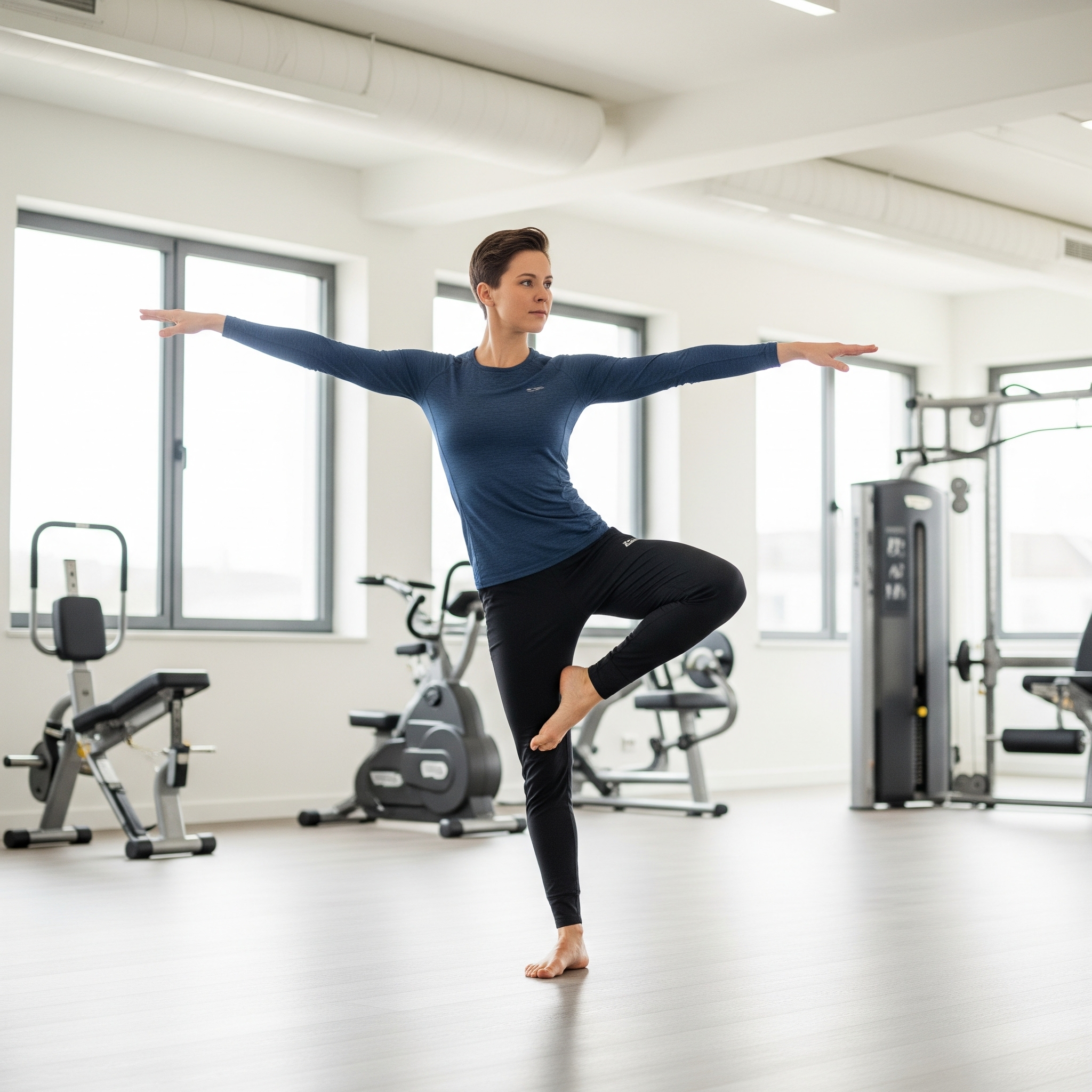
The passage of time cannot be stopped, but we can decide how we age. Longevity is not measured solely in years lived, but in the quality of those years. In the freedom to move, play, get up from the floor effortlessly, carry grocery bags without pain, or simply maintain an active routine without fear of injury.
In contemporary physical training, we often talk about strength, endurance, or body composition as the main indicators of health. But there are three qualities that are equally fundamental—and often underestimated:mobility, stability and control.
At El Dojo, we understand that a long-lived body isn't necessarily the strongest or the fastest. It's the one that moves well for the longest time. The one that maintains its range of motion, can hold postures with control, and adapt to the changes of daily life without breaking down.
We will explore how to work on mobility, stability, and control as pillars of training, and why investing in these abilities is betting on a functional, autonomous, and vital body over time.
Why mobility, stability, and control?
Before going into detail, it is worth defining each of these terms, as they are often confused or used interchangeably:
- MobilityIt is the ability of a joint to actively move through its full range of motion. That is, not just that something "can move," but that you can move it with control, without pain or compensatory movements.
- StabilityIt is the ability of a joint or body segment to maintain a position or resist a disturbance without collapsing. It requires intelligent muscle activation and neuromuscular coordination.
- Control motorIt is the ability to coordinate body movements precisely, efficiently, and safely. It involves the nervous system and its capacity to intelligently "govern" the body.
These three qualities work together.There is no useful mobility without stability to sustain it, nor real stability without control to orchestrate it.
Mobility: the art of moving freely
A body with good mobility can do deep squats, rotate the shoulders without pain, tilt the pelvis without compensating with the back, or raise the arms above the head without excessively arching the spine.
Mobility is built through active work. Simply stretching isn't enough. It requires strength across a wide range of motion, body awareness, and intelligent repetition.
Practical examples:
- Controlled hip circles (CARs).
- Deep squats without weight.
- Spinal and pelvic flexes from the floor.
DOJO Council:Mobility training isn't just a warm-up before the "important" part. It's a practice in itself. A squat without ankle and hip mobility isn't an efficient squat: it's a compensation disguised as a squat.
Stability: the strength that is unseen, but felt
Imagine a suspension bridge. It's not enough for it to move; it must remain stable against the wind. The same is true for your body. You may have mobility, but without stability, every movement is an invitation to injury.
Stability is built through proper activation of the deep muscles: the core, the scapular muscles, and the hips. It's not about being "rigid," but about knowing when and how to activate these muscles to maintain a position or resist an external force.
Practical examples:
- Front plank with focus on abdominal and gluteal activation.
- Bird-dog con control.
- Assisted single-leg squats.
DOJO Council:Stability isn't just about preventing falls. It's what allows a load to be distributed correctly across the body. Without stability, everything becomes overloaded.
Motor control: intelligence at the service of movement
You can be strong and flexible, but if you lack control, your movements will remain clumsy or dangerous. Motor control is the neuromuscular translation of what your body wants to do.
Training involves slow, mindful exercises that demand precision and focus. It also incorporates variability: changing pace, terrain, and direction. The opposite of automatic behavior.
Practical examples:
- Unilateral movements (such as lunges or step-ups).
- Exercises with eyes closed to challenge the proprioceptive system.
- Slow transitions between postures (as in animal training or flow).
DOJO Council:Motor control isn't just for athletes. It's for anyone who wants to move better, avoid injuries, and age independently.
The role of the nervous system
This entire approach has one key foundation: the nervous system. It's what coordinates, adjusts, and regulates movement. When we train mobility, stability, and control, we're educating the nervous system to respond more effectively.
This has a direct impact on functional longevity:
- It reduces the risk of falls and injuries.
- It improves quality of life (getting up, turning, bending down with ease).
- It preserves motor independence in old age.
Training the body without training the nervous system is like updating the hardware without touching the software.
How to integrate these pillars into your routine
You don't need to dedicate an entire hour just to mobility or control. But it is key that these exercises are present throughout the week and, above all, that they are integrated into strength, endurance, or technique training.
Practical suggestions The DOJO:
- Start the session with 5 to 10 minutes of active mobility work (not passive).
- Include stability exercises in the warm-up (e.g., planks with variations).
- Use slow transitions between exercises to cultivate control.
- Unilateral training (lunges, rows, one-arm presses).
- Dedicate at least one session per week to specific joint mobility and coordination work.
A long-lived body is not one that avoids wear and tear at all costs. It is one thatknows how to adaptthat maintains its range of motion, that stabilizes without rigidity, that responds precisely to its environment. A body that not only withstands the test of time, butIt evolves with him.
Mobility, stability, and control are not minor skills. They arethe invisible foundation that supports everything elseTraining these qualities not only improves athletic performance, it improves quality of life. It prepares you to play with your children, to bend down without pain, to move around at 70 with the same dignity you had at 30.
At El Dojo, we believe that true progress is the kind that stays with you long-term. That's why we train not just for today, but also for the future. Because longevity isn't something you can just whip up: it's built with intelligence, focus, and consistency.
Invest in the quality of your movement now, so your body will thank you for it forever.
Related articles
See more
Exercise and the menstrual cycle: how to move in each phase


Community training: the power of moving with others
What is the DOJO method and why does it work?