Community training: the power of moving with others
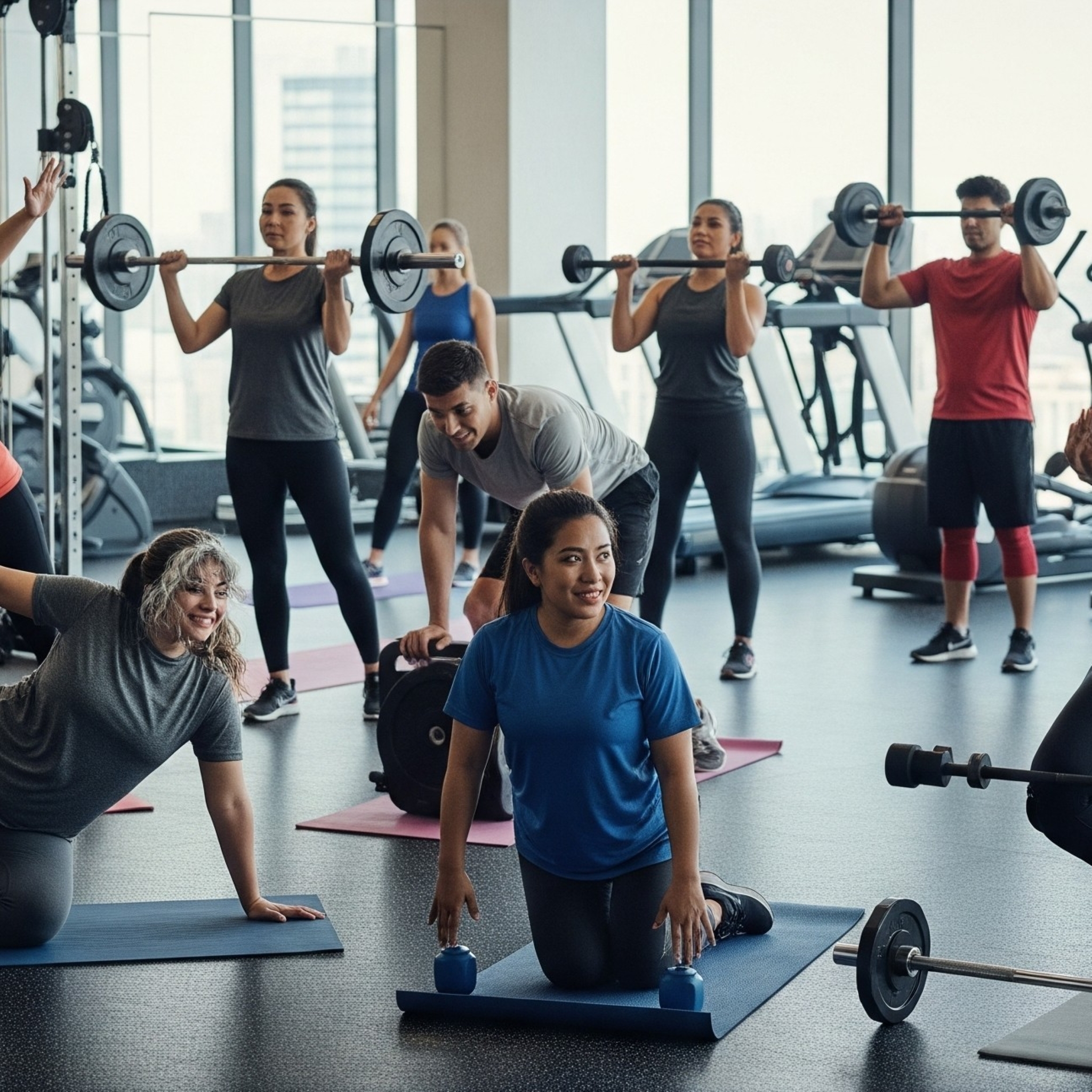
Physical training is often presented as an individual act: you against the clock, you against the bar, you pushing your limits. But this narrative ignores an essential dimension of movement:the power of training with othersMoving in community not only provides motivation, but also profoundly transforms the way we inhabit our bodies, relate to effort, and sustain the practice over time.
At El Dojo, we understand training as a shared practice. We value both personal progress and the environment that fosters it. We know that a present, committed community aligned with the same philosophy enhances individual growth. Because moving alone is not the same as moving with others. Training is not the same as belonging.
We'll explore the physical, emotional, and psychological benefits of training in a community. What happens when the environment is supportive rather than competitive? Why human connection can be as powerful as the best training plan? And how creating a space where moving with others becomes an essential part of the process?
Beyond motivation: training as a collective experience
Community training isn't simply about "doing the same thing at the same time." It's about sharing a purpose. It's about building a space where vulnerability is allowed, effort is celebrated, and the improvement of others is not a threat, but an inspiration.
Behavioral science supports this: people who train in groups show higher rates of long-term adherence, lower perceived effort, greater enjoyment, and significant improvements in mental health indicators.
The key factor is not just the exercise itself, but the human connection that is built around the exercise.
1. Maintain consistency (even when motivation is lacking)
One of the main barriers to individual training is inconsistency. There are days when you lack energy, motivation, or clarity. At those times,the community acts as a support.
Knowing that someone is waiting to see you, that you are part of a shared structure, that your presence matters, can be the necessary push to show up, even when you're not having the best day.
DOJO CouncilDon't underestimate the power of the everyday. Sometimes, the greatest achievement is simply being present. And being in community makes it easier.
2. Raise the standard (without falling into comparison)
Training with others naturally raises the bar. But not because of destructive competition, but because you see what's possible. You realize you can do more, that there are new ways to move, that there's real room for improvement.
The key lies in the context: when the group does not judge, but encourages, when there is no pressure to perform, but inspiration to share, improvement becomes organic.
Training in a community isn't about competition, it's about self-reflection. It's about seeing in others what's also within you.
3. Learn by observing, correct with more resources
Motor learning doesn't happen just through repetition. It also happens through observation. Watching someone else move well—with technique, control, and fluidity—stimulates mirror neurons that improve your understanding and execution of the movement.
Furthermore, in a shared environment, feedback doesn't just come from the coach: it can come from the partner who sees you from another angle, from the one who has already gone through what you are practicing, from the one who helps you adjust a pattern that you don't notice.
In community, learning multiplies.
4. Validate the effort, not just the result
One of the most powerful benefits of training with others isthe recognitionNot the one who lifts the most weight, but the one who was able to do one more repetition today. Not the one with perfect technique, but the one who dared to try something new.
In a well-maintained space, every effort is seen. And that's vital, becauseProgress isn't always visible in the mirror, but it is felt when others recognize it..
DOJO CouncilCelebrating others is a way to train your empathy. And receiving that validation is emotional fuel to sustain the process.
5. Share values, not just exercises
A true community isn't formed simply by training together. It's formed when there's a shared framework: values, goals, and codes. At El Dojo, we promote a culture of respect, commitment, non-judgment, and the pursuit of individual progress without sacrificing the collective.
This creates an environment where you can make mistakes, learn, and ask questions. Where there's room for all levels, ages, and backgrounds. Where the focus isn't on "being the best," but on "being better than yesterday."
That culture is cultivated. It's contagious. And it's sustained by everyone.
6. Training as a social ritual
In a fast-paced and often isolating world, group training becomes a ritual. A space where you not only strengthen your body, but alsoYou connect with others from a more authentic dimension.
It doesn't matter if you're an extrovert or an introvert. What matters is knowing there's a space where you can come with what you have, share real effort, and leave feeling lighter, more focused, and more fulfilled.
Training thus becomes a practice of belonging.
7. The value of the team even in individual disciplines
Even when a sport or activity seems solitary—running, strength training, mobility exercises—doing it in a community changes the paradigm. Because even though everyone has their own goal,the journey becomes shared.
Breaks are for conversation. Fatigue is acknowledged as a group. Victories are celebrated. Mistakes are processed together. And most importantly: there's a team that motivates you to come back.
DOJO CouncilYour process is yours, but you don't have to do it alone.
Training in a community isn't just a bonus. It's a powerful strategy for sustaining effort, enjoying the process, and growing more deeply. Because when you surround yourself with people who share your values, support you when you make mistakes, and celebrate your progress, the path becomes clearer, stronger, and more meaningful.
At El DOJO, we believe that movement connects. And that a community that moves together not only trains more, it trains better. Because training stems from connection, listening, respect, and collective building.
So if you've ever thought that training is a solitary path, we invite you to try something else. To join a space where the physical, emotional, and social aspects coexist. Where moving with others isn't a coincidence: it's part of the purpose.
And that—believe me—is also progress.
Related articles
See more
Exercise and the menstrual cycle: how to move in each phase

Mobility, stability and control: the keys to a long-lived body
What is the DOJO method and why does it work?