Yoga as an emotional practice: letting go, accepting, moving forward
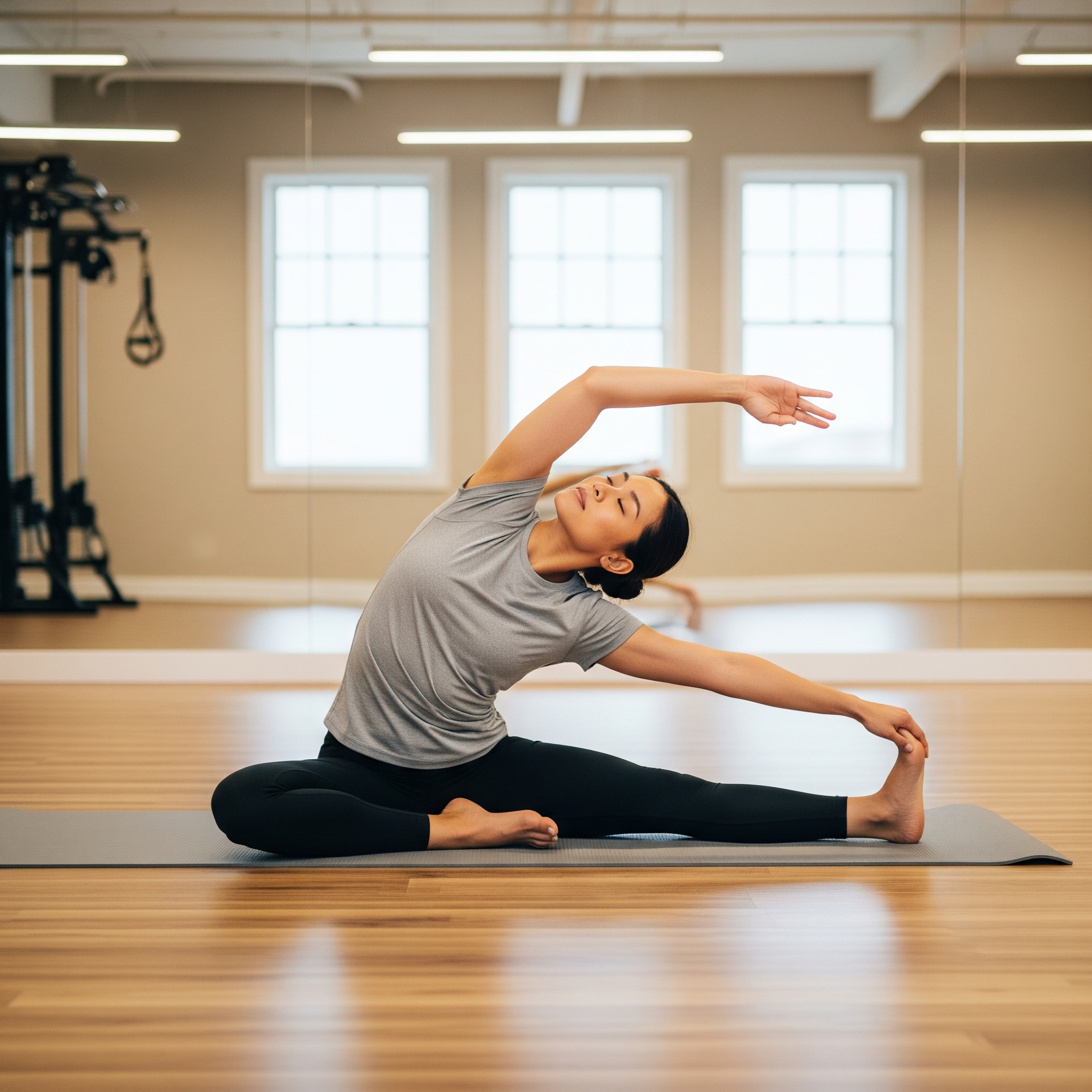
In recent years, yoga has become established as a popular practice for improving mobility, relieving postural pain, and reducing stress. But beyond its physical benefits and positive impact on the nervous system,Yoga is also a powerful tool for emotional workIn a world where we are often required to be well, perform, be productive and positive, the mat can become a refuge to process what we feel without filters or judgment.
Through breathing, conscious movement, and the introspection offered by each practice,Yoga invites us to inhabit the body as a way to access our emotionsRecognizing them, giving them space, and learning to navigate with them instead of resisting them. This path is not always comfortable, but it is profoundly transformative.
We will take a comprehensive look at how yoga can accompany us in emotional processes, helping us to let go of what no longer serves us, accept what is, and move forward with greater authenticity and presence.
The body as an emotional archive
It is not by chance that many people cry in savasana, or feel a wave of sadness or anger after an intense practice.The body holds memories.Emotions that aren't expressed through words or tears often manifest as muscle tension, posture, and breathing patterns. This isn't an esoteric concept, but rather an observation supported by neuroscience and psychosomatics.
When we move with awareness—especially in practices like Hatha, Yin, or slow Vinyasa—we are touching deep layers of ourselves. It's not uncommon for opening the hips to release sadness, or for a twist to make us feel pent-up anger. The practice thus becomes asafe space to observe without judgment, without needing to understand everything from a mental perspective.
Let go: what we no longer need
The invitation to let go is a recurring theme in yoga. Letting go of the breath, letting go of unnecessary effort, letting go of expectations. But it's also about letting go of emotions, narratives, and habits that limit us.
Emotionally, letting go doesn't mean denying or rejecting. On the contrary,Letting go begins with allowing yourself to feel.Only when something is acknowledged can it begin to transform. In yoga, this possibility manifests in the present moment: by inhabiting an uncomfortable posture, by breathing through tension, by staying a little longer without escaping. It is there that the body and mind learn that not every stimulus requires an immediate reaction. It is there that liberation begins.
Positions that help to release:
- Uttanasana (forward bend):It promotes rest for the nervous system and literally allows you to "let go" towards the earth.
- Supta Baddha Konasana (Reclining Angle Pose):It opens the pelvic area, where many unexpressed emotions are stored.
- Long exhalations:Each time we lengthen the exhalation, we signal the nervous system to release tension.
Accept: what is, as it is
Acceptance is not resignation, but seeing clearly. Acceptance is saying, “this is happening,” without adding layers of judgment. From this perspective, yoga becomes aradical presence training: when we breathe in a difficult posture, when we stop competing or comparing ourselves, when we stop "doing to achieve" and start simply being.
Emotional acceptance involves acknowledging our internal states without immediately trying to change them. It allows us to be with sadness without trying to suppress it, with anxiety without reacting compulsively, and with joy without fearing its end.
In yoga, this attitude is cultivated in every conscious breath:
- I accept that my body is more rigid today.
- I admit that I have trouble concentrating.
- I accept that there is anger or tiredness in me.
From that acceptance something very valuable emerges:compassion.And from there, every transformation becomes more sustainable.
Useful techniques for cultivating acceptance:
- Mindfulness practices:observe without modifying, simply be.
- Restorative Yoga:It invites you to receive the experience without forcing anything.
- Body-anchored meditation:cultivate presence through physical sensations.
Moving forward: integrating and transforming
The emotional process doesn't end with letting go or accepting. At some point, naturally, the desire to move forward arises. To move forward not from a place of obligation, but from genuine integration.
Yoga doesn't "fix" or eliminate emotions. But it does give us tools to navigate complex processes with greater clarity, stability, and openness. It allows us to act with greater freedom because we are no longer reacting from automatic reactivity, but from a more conscious place.
Progress is not linear. It's a spiral movement, where we sometimes revisit old wounds, but we do so with greater resources. In yoga, progress can manifest as:
- Returning to a position we previously avoided.
- Expand our breathing capacity during exertion.
- Sustain your attention a little longer without disconnecting.
Moving forward also means being able to stop without guilt.Choosing rest when needed. Saying "no" when something doesn't resonate. Recognizing one's own limitations not as obstacles, but as signs of inner wisdom.
Yoga is not just a physical practice. It is a profound, albeit silent, emotional practice. Every time you stand on the mat with honesty, you are training much more than your body: you are training your capacity toto be present with what is, just as it is.
Letting go, accepting, and moving forward are natural movements of the soul. Yoga doesn't impose them, but it facilitates them. It offers us a body language to express what words cannot. And in that speaking without speaking, in that unhurried movement, the most important thing emerges: contact with oneself.
At El Dojo, we believe that true well-being is built by integrating all dimensions of being. Therefore, we invite you to explore your practice from an emotional perspective, without fear, with curiosity, and with the certainty thatEvery conscious breath is a step forward.
Related articles
See more
Cultivating presence: taking yoga off the mat

Yoga and physical training: rivals or allies?
How to start yoga if you've never been flexible