Hybrid wellness spaces: training, yoga, and community
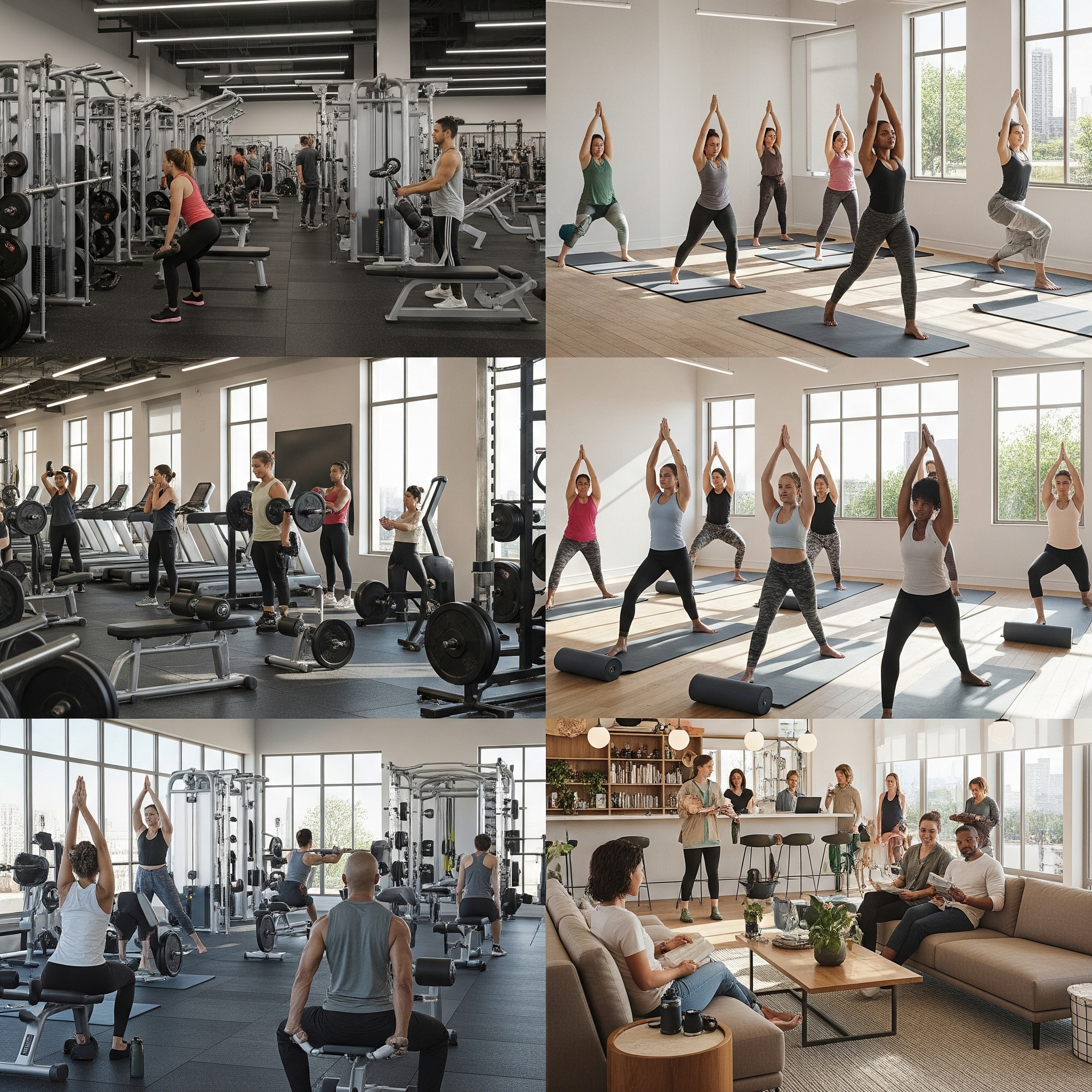
In recent years, the concept of well-being has ceased to be an individual experience and has become something broader, more integrated, and profoundly human. Gone are the days when the gym was just a place to lift weights or the yoga studio a room for silent stretching. Today, people seek spaces that not only allow them to move, but alsoconnect, transform and belong.
This is how they are bornhybrid wellness spacesA growing global trend, this approach combines complementary disciplines such as functional training, yoga, and community dynamics. These are not sports centers or spiritual temples: they are vibrant environments where body, mind, and relationships are cultivated in harmony. At El Dojo, we understand this approach as a holistic response to the needs of contemporary well-being.
What is a hybrid wellness space?
A hybrid wellness space is more than a physical place. It's adesign philosophy and coexistencewhere different practices —physical, mental and social— converge with the aim of offering a complete experience of health and personal growth.
These spaces include:
- Functional physical training, based on conscious movement, useful strength and injury prevention.
- Yoga and mobility practiceswhich not only improve flexibility and body control, but also internal connection.
- Community components and emotional carefrom talks, workshops or simply the act of sharing a mate after class.
This approach reflects a more comprehensive understanding of well-being: it's not just about looking good or performing better, but aboutliving with presence, purpose, and mutual support.
Why do these spaces emerge?
The rise of hybrid spaces is a direct response to several cultural changes and emerging needs:
- The fragmentation of disciplines no longer makes sense
More and more people understand that training without mobility leads to injury, that flexibility without strength is not functional, and that the body without awareness is just a mechanism. Hybrid spaces integrate this knowledge into a coherent and effective practice. - The desire for community as an emotional need
After years of hyper-individualism (and a pandemic that intensified it), people are lookingspaces where you can not only train, but belongThe community becomes part of well-being, not something separate. - Time is limited: integration optimizes
With demanding schedules, being able to find a place to train, connect, stretch, learn and share, all in one experience, is a huge value. - The focus on sustainable health
Quick results are no longer enough. People want practices that are sustainable over time, that take care of the body, and that respect its internal rhythms. That's why combining yoga and functional training with time for conversation, rest, or mindful eating is key.
Characteristics of an authentic hybrid space
Not everything that combines different activities is a true hybrid space. For this proposal to have an impact, it must be built from aclear philosophyand aintentional designSome key points:
- Curation of complementary practices
It's not about offering "a little bit of everything," but about selecting disciplines that complement each other. At El Dojo, for example, we combine functional physical training with yoga, mobility, and conscious breathing. Each practice enhances the others. - Professionals with an integrative vision
The instructors and guides in these spaces not only master their technique, but also understand the mind-body-emotion interaction. They don't train muscles, they guide processes. - Design of a physical space that invites interaction
Beyond simply providing a well-equipped room, these spaces are designed for connection: common areas, rest zones, natural light, and high-quality materials. Every detail conveys the intention to care for others and for oneself. - Living community culture
Community isn't created overnight. It's cultivated through events, activities, conversations, and shared rituals. It's an active part of the experience, not an accidental byproduct. - Cohesion in language, tone, and experience
From communication to the way people are welcomed, everything reflects the philosophy of the space. The experience of well-being doesn't begin in the classroom, but from the very first greeting.
Benefits of the hybrid approach
- Greater adherence and sustainability
People stay longer when they feel a space offers them more than one dimension. It's not just about physical results, but about overall well-being. - Injury and overtraining prevention
By integrating mobility, breathing, and body awareness, intensity is balanced with recovery. The body moves better and recovers better. - Personal growth
Training and yoga, experienced in community and through introspection, become practices of self-knowledge. It's not just about performing better, but aboutto be more aware. - Emotional support and social connection
The bonds formed in these spaces can be just as important as the classes themselves. Connecting with others strengthens motivation and a sense of belonging. - A new standard of well-being
This trend is changing how we understand healthcare spaces. Having humane and well-rounded spaces is no longer a luxury: it's the new standard that many people are looking for—and need.
Examples around the world and the role of The Dojo
In cities like London, Berlin, Mexico City, or Melbourne, there are already studios and centers that integrate this philosophy: functional training with meditation spaces, yoga studios with conscious coworking areas, gyms that also function as cultural centers.
At El Dojo, this vision is part of our DNA. We don't believe in the body being separate from the mind, nor in performance without purpose. That's why our classes, the design of the space, and the way we connect with each person all point to the same thing:to create a place where movement becomes experience and community becomes refuge.
The well-being of the future will not be one-dimensional. It will behybrid, integrative, and profoundly humanIn a fast-paced and fragmented world, we need places that reconnect us with our bodies, our minds, and with other human beings. Places where training is also meditation, where stretching is also sharing, where movement is also belonging.
Hybrid wellness spaces are not meant to replace what came before, but to evolve it. They are a response to a real need: to live better, with less separation and more meaning.
At El DOJO, we believe in this path. Because when we train with presence, practice with intention, and share with care, well-being ceases to be a goal and becomes a way of inhabiting the world.
Related articles
See more
Sustainable trends: well-being for the body and the planet

Self-care as a form of personal activism
How boutique gyms are evolving around the world