Training with purpose: beyond burning calories
For years, the relationship between exercise and health has been dominated by a simplistic logic: training to burn calories. This narrative, rooted in traditional fitness culture, reduces movement to a tool for “wasting energy”, compensating for dietary excesses or achieving an aesthetic ideal. As if the body were a mathematical account between what comes in and what comes out.
But training is much more than that. Training is a practice of exploration, adaptation and internal construction. It is a way of inhabiting the body, of building physical and mental strength, of expanding capacities, of bonding with others and with oneself.
At The DOJO, we believe that movement makes real sense when it has a purpose. And that purpose isn't just measured in calories burned, but in what you gain: strength, autonomy, confidence, joint health, resilience and presence. This is why we invite you to rethink your training from a deeper and more functional place.
Caloric reductionism: a limited view

- Fosters a utilitarian relationship with the body, where movement is only valid if it generates a visible caloric expenditure.
- It generates frustration when aesthetic results do not come quickly, leading to the abandonment of the habit.
- Let go of enjoyment, exploration, play and internal connection that are an essential part of human movement.
- Ignore deep physiological adaptations of training that go far beyond immediate energy expenditure.

Of course, moving helps manage body weight. Pero training isn't just a control strategy, it's a form of personal transformation. And when the purpose is broader, so is the commitment.
Beyond Routine: How to Build a Meaningful Practice
- Active joint mobility
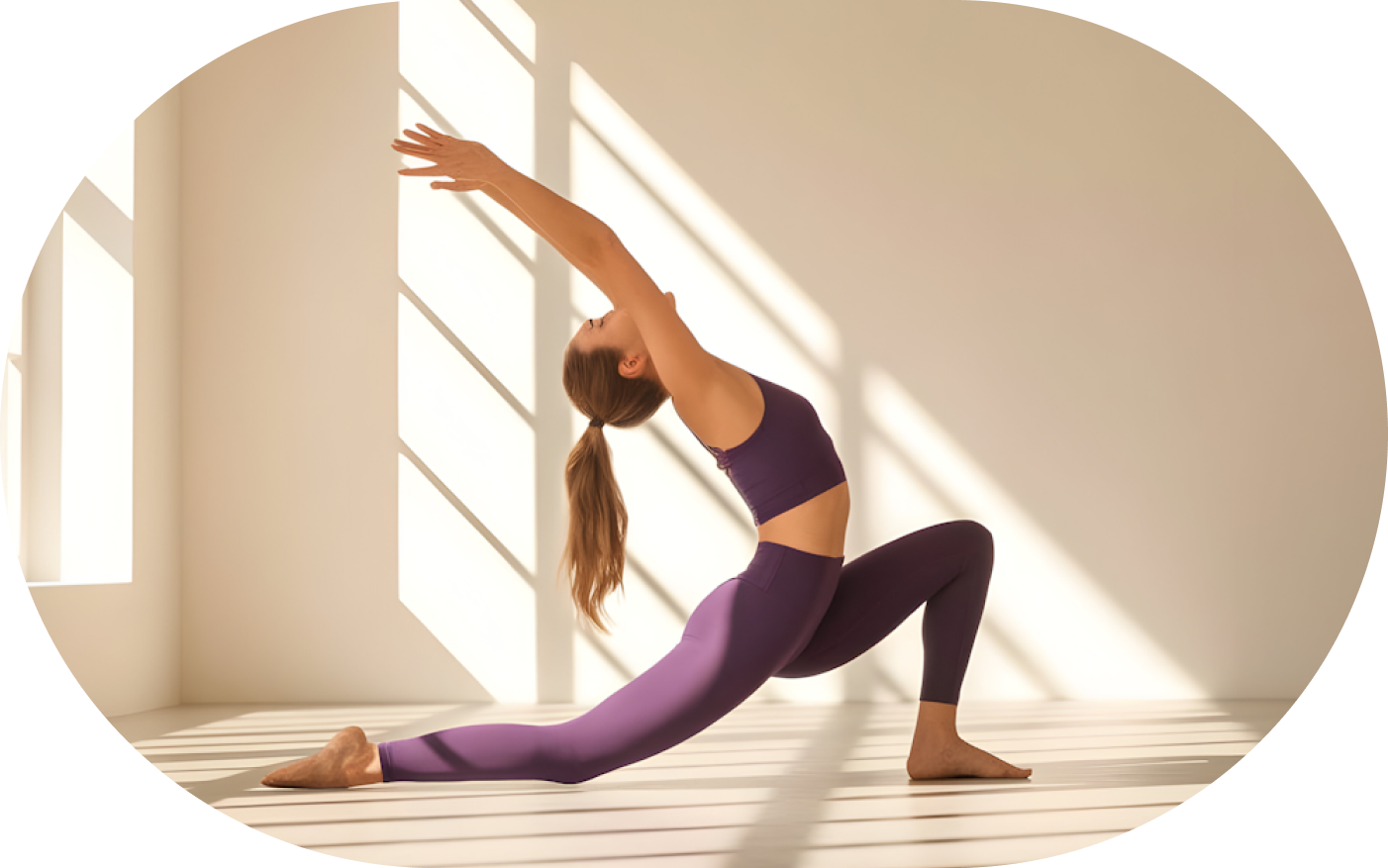
Many yoga poses combine strength with elongation, which stimulates neuromuscular control. Unlike passive stretching, yoga works on functional mobility, that ability to move with stability and control within a wide range of motion. This prevents injuries and improves the quality of the sporting or technical gesture. - Body awareness
Yoga trains proprioception: knowing what position your body is in without looking at it. This translates into greater efficiency and precision when moving, which is key in disciplines such as calisthenics, lifting, dance or contact sports. - Respiration and nervous systemLearning to breathe mindfully during exercise or recovery improves muscle oxygenation, regulates stress and increases tolerance to physical discomfort. The breathing techniques of yoga (pranayama) also help balance the nervous system, which is key to sustaining long-term recovery and performance.
- Injury Prevention and RecoveryA well-guided yoga practice acts as a body maintenance system: it moisturizes tissues, improves circulation, and detects accumulated tensions before they turn into pain. It can also be an essential part of a rehabilitation protocol.
- Mental stabilityPhysical training can be demanding not only on the muscles, but also on the mind. The practice of yoga offers tools for emotional self-regulation, mindfulness and focus that improve the quality of the practice and the relationship with one's own body.